I found my kids in a familiar scene the other day: all three in the same room together ignoring each other while staring at their phones. It was a modern cliché, right? So is this another blog about how modern technology is turning us all into isolated zombies?
Not so fast. One child was reading an e-book for a school assignment. Another was working on a creative project with a friend. The third was chatting with her far-away friends from college and planning a trip together. While there is some truth to the isolation complaint (a future blog topic, perhaps), it is also true that modern technology enables us to do things we never dreamed of in the past.
Using technology to enable strategy execution has the same tradeoffs. I have spent the last few years presenting and writing about how AI should not be used for strategy design, but today I’m going to focus on the fact that used well, it can connect us and revolutionize the process along the way.
Technology Can Connect Us to What Matters
Technology isolates us when it becomes a substitute for real conversation, shared understanding, and human judgment, all foundational elements of strategy. It can create more noise without improving focus, and it can increase and amplify communication without improving connection. But that is only one side of the story. Technology, including AI, can also be used to connect people in powerful ways, especially around strategy execution. One of the greatest opportunities for organizations today is to use technology not simply to automate work, but to connect people to purpose, priorities, performance, and progress.
Most organizations do not struggle with strategy execution because people are unwilling to work hard. They struggle because people are overwhelmed with a thousand different priorities and operational responsibilities. Strategy is supposed to enable us to focus our efforts and prioritize, but in most cases the volume of possibilities is not discussed enough, and strategy becomes just one more activity to worry about. People are not sufficiently connected to the strategy. Employees may not understand the priorities. Departments may interpret plans differently. Leaders may review performance from one perspective while frontline teams experience a different reality. Initiatives may move forward without clear linkage to outcomes. KPIs may be tracked but not discussed in a way that drives decisions.
The result is activity without alignment. People are busy, projects are moving, reports are being produced, and meetings are being held, but the organization is not necessarily executing the strategy with focus and discipline. At its core, strategy execution requires connection. People need to understand the mission, teams need to align around priorities, initiatives need to link to objectives, measures need to connect to results, leaders need visibility into what is really happening, and decisions need to be grounded in evidence. Technology can help create these connections when it is used intentionally.
Technology Can Create Line of Sight – If Coordinated
One of the most important principles in strategy execution is line of sight. People need to see how their work contributes to the larger strategy. Without that line of sight, strategy feels distant. It becomes something owned by senior leaders, referenced in annual meetings, or displayed on a slide, but not something that guides daily decisions.
The technology of our era promises to support that line of sight but often the opposite happens due to lack of coordination and integration. Strategies are normally discussed over slideshows, measures are tracked on spreadsheets, discussions are managed using half dozen collaboration tools favored by various departments.
Strategy execution platforms, dashboards, and AI-enabled reporting can help close that gap. A well-designed system can visualize how enterprise goals connect to departmental objectives, how objectives connect to KPIs, how KPIs connect to targets, and how strategic initiatives connect to measurable outcomes. That visibility matters. When people can see the connection between their work and the organization’s strategic direction, they are more likely to understand priorities, make better tradeoffs, and focus effort where it matters most. Technology should not simply display the plan. It should help people see themselves in the plan.?
AI Can Help Leaders Prioritize at Scale
AI is a double-edged sword when it comes to prioritization because it so easily enables the mass production of strategy content. Need a new charter for that new million-dollar initiative? In 7 seconds, what used to take a week appears before your eyes. Then as soon as you get done marveling over the polished plan it produced you realize that someone still must execute. Leaders now have hundreds of employees all generating their own strategy components in parallel, creating a prioritization nightmare.
Leaders need to know whether the strategy is understood, whether initiatives are working, whether barriers are emerging, and whether assumptions still hold true. Historically, gathering that feedback has been difficult. Leaders might rely on meetings, surveys, informal conversations, or filtered updates moving up the chain of command. Important signals can be missed, and frontline insights can arrive too late.
AI can help change that. It can summarize employee feedback, analyze open-ended survey responses, identify themes from interviews, detect patterns in customer comments, and help leaders understand what people across the organization are saying. This does not replace listening, but it makes listening more scalable.
Used well, AI helps leaders hear more voices, more quickly, and with more structure. It can surface issues that deserve deeper discussion and help leaders prepare better questions for strategy review meetings. In this way, AI does not remove the human element from strategy execution. It strengthens it by helping leaders listen more broadly and respond more thoughtfully.?
Technology Can Improve Strategy Reviews
Many organizations conduct strategy review meetings, but too often those meetings become reporting rituals. People review dashboards, initiative owners provide updates, KPIs are labeled red, yellow, or green, leaders ask a few questions, and then everyone goes back to work. The problem is not the meeting itself. The problem is that the meeting is not always connected to decisions.
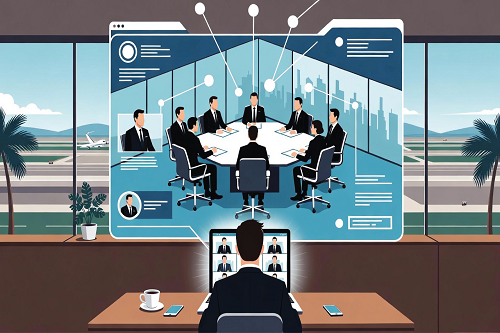
Technology can help strategy reviews become more focused, evidence-based, and action-oriented. A strategy execution platform can bring together KPI trends, initiative status, milestone progress, risks, dependencies, owner commentary, and prior decisions. AI can help summarize performance patterns, highlight exceptions, draft briefing notes, and identify questions leaders should discuss.
This allows the strategy review to move beyond “What is the status?” and toward more important questions: What is changing? What are we learning? Where are we off track? Which assumptions need to be revisited? What barriers require leadership action? What decisions must we make now? The value of technology is not that it produces a more attractive dashboard. The value is that it helps leaders have a better management conversation.?
AI Should Strengthen Strategic Conversations, Not Replace Them
There is a real risk that AI could be used to avoid difficult conversations, and that would be a mistake. AI should not make strategy execution less human. It should make strategic conversations more informed, more focused, and more productive.
Before a strategy review, AI can help summarize performance data, identify possible root causes, compare progress across initiatives, and draft discussion prompts. During planning updates, it can help test whether initiatives are clearly linked to intended outcomes. During communications, it can help translate complex strategy language into messages that different audiences can understand.
But the conversation still belongs to people. Leaders still need to interpret the data, teams still need to debate tradeoffs, owners still need to explain barriers, executives still need to make decisions, and employees still need to understand why the strategy matters and how their work contributes. AI can sharpen the conversation, but it should not replace the conversation.?
AI Can Revolutionize and Teach Strategic Thinking
Step 1 of the Nine Steps has been revolutionized by AI, as it can be a powerful tool for assessing an organization’s strategic environment by helping leaders gather, organize, and interpret large amounts of information more quickly than traditional analysis alone. It can provide quick food for thought on market trends, customer behavior, competitor activity, regulatory developments, technology shifts, and economic signals to help teams identify emerging opportunities and threats. AI can also support classic strategy tools such as SWOT, PESTLE, scenario planning, and competitor analysis by surfacing patterns, summarizing evidence, and testing assumptions against broader data sources. Used well, AI does not replace human judgment or stakeholder dialogue but rather strengthens them by giving leaders a more informed starting point for discussion, helping them ask better questions, challenge outdated assumptions, and make more disciplined strategic choices. Beyond improving the process, I can also more easily teach the value of strategic assessment by quickly demonstrating the process – what used to take months can now be done as part of a single conversation.
Technology Should Bring People Closer to Strategy
Technology is often accused of isolating us, and sometimes that criticism is deserved. But technology itself is not the problem. Unintentional technology is the problem. When tools create noise, duplication, surveillance, or confusion, they weaken execution. When AI is used to bypass conversation or avoid leadership judgment, it can damage trust. When dashboards are used only to report status, they can become disconnected from real management.
But when technology is used to create clarity, visibility, participation, and shared learning, it can help people connect more deeply to the strategy and to one another. That connection is essential because strategic plans do not execute themselves, and software/AI does not execute them. People execute strategy. And people execute strategy better when they are connected to purpose, aligned around priorities, informed by evidence, supported by technology, and engaged in a disciplined rhythm of review and action. That is how technology and AI can help organizations move from communication to connection, and from connection to execution.
Are you ready to elevate your career and organizational impact? Explore Balanced Scorecard Professional certification through the Balanced Scorecard Institute and George Washington University’s Center for Excellence in Public Leadership and take your strategic leadership to the next level.

David Wilsey is the Chief Executive Officer with the Balanced Scorecard Institute and co-author of The Institute Way: Simplify Strategic Planning and Management with the Balanced Scorecard.